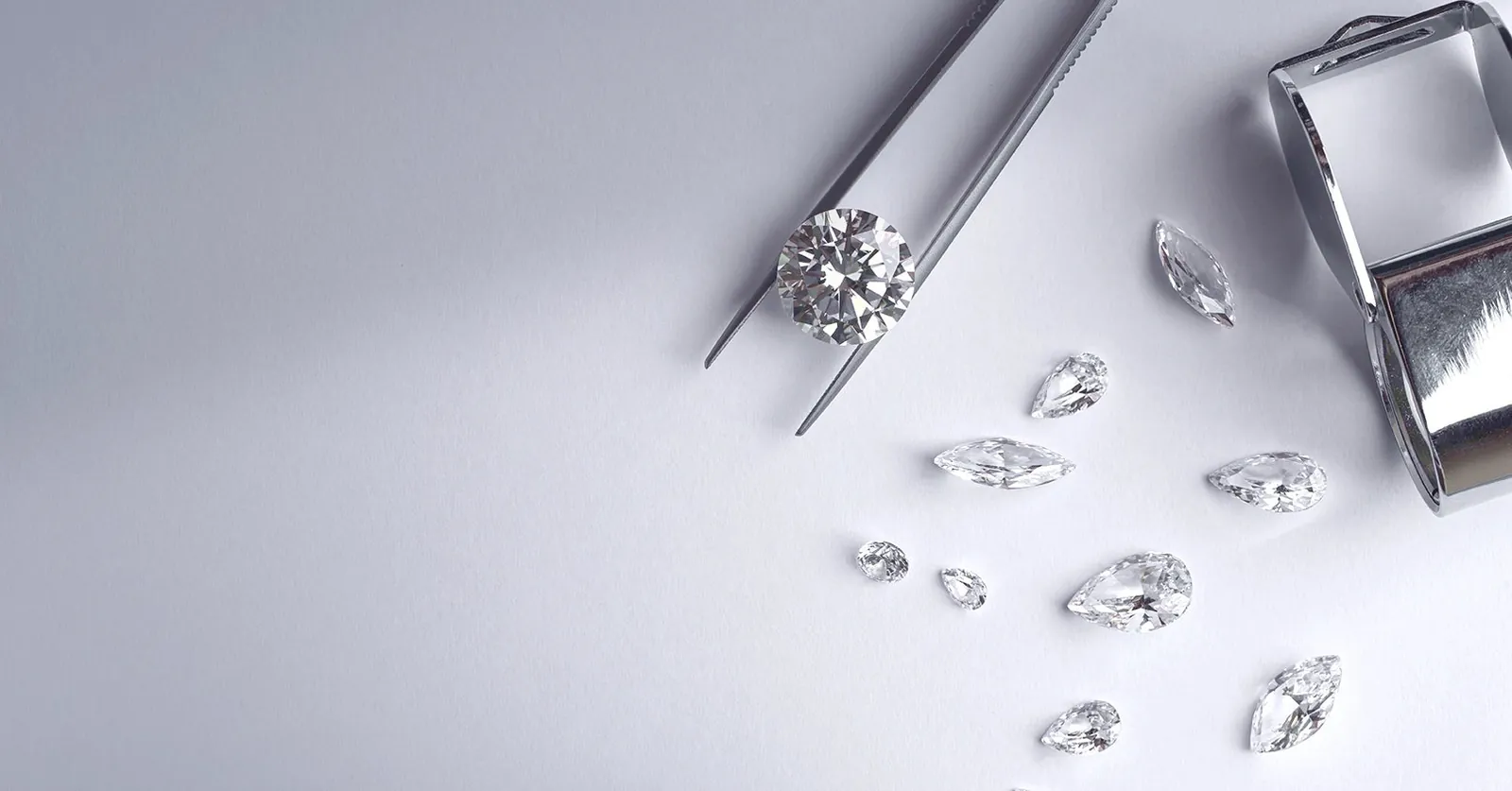
How to discover her style without giving it away
Four gentle approaches that surface real preferences. Pick the one that fits how you two communicate.
Open Conversation
Some couples want to design it together. If she is a planner who appreciates being involved, an open conversation collapses guesswork and turns the search into a shared memory you both look back on.
Best whenshe values being part of the process more than the surprise itself.
Observe Quietly
Look at what she already wears daily. Gold tones or cool platinum. Delicate or bold. Her existing jewellery is a design brief she has been writing for years without realising it, and it is hiding in plain sight on her own hand.
Best whenyou want a true surprise and her style is already clear from her wardrobe.
Window Shopping Together
A casual visit "just to look" lets her try styles on without commitment. Watch which pieces she lingers on, which she slips off her finger reluctantly, which she keeps returning to once she thinks the conversation has moved on. Her hands tell you more than her words ever will.
Best whenshe is hard to read and you want her own reactions to guide you.
Decode the Pinterest
If she has a private inspiration board, her closest friend has almost certainly seen it. Ask them to pattern spot the dominant shape, metal, and setting style across the pins she keeps coming back to. The repeats reveal what she actually wants, not what she thinks she should want.
Best whenyou have a trusted ally on the inside and need a head start without raising suspicion.
Choosing the metal
The metal you choose dictates the ring's colour, its weight on her finger, and how it ages over the decades she will wear it. Each of the four carries a personality of its own.
Platinum is the densest and most durable of the four, naturally hypoallergenic, and develops a soft warm patina with wear. It is the serious collector's metal, and the most resilient choice for a piece intended as an heirloom.
White gold offers the same cool tone as platinum at roughly half the price. It needs rhodium replating every few years to maintain its brightness, but the cost is modest and the visual result is identical to the untrained eye.
Yellow gold carries the warmest tone of any metal in the catalogue and is the lowest maintenance of the four. It flatters every skin tone and pairs effortlessly with vintage settings, milgrain detail, and antique stones.
Rose gold takes its distinctive blush hue from copper alloyed with the gold. Modern, soft, and beautifully photogenic in any light, it has become the metal of choice for designs that want to feel contemporary without straying from tradition.


Which one is she?
Almost every woman gravitates strongly toward one of these four design languages. Place her, and everything else gets easier.
The Classic Romantic
Drawn to solitaires, simple bands, brilliant-cut diamonds. She values heritage over noise and would rather own one perfect thing than three trendy ones.
Best fit: Round brilliant or oval solitaire, platinum or white-gold band, four or six-prong setting.
The Vintage Dreamer
Loves milgrain detail, halo settings, the texture of old-cut stones. Pinterest boards full of Art Deco and Edwardian inspiration.
Best fit: Halo or floral setting, cushion or emerald cut, rose or yellow gold band with milgrain edge.
The Modern Minimalist
Sharp geometry, low profile, no fuss. She wears one signature ring and nothing else, and she wants it to disappear into her hand until the light catches it.
Best fit: Bezel-set solitaire, emerald or radiant cut, platinum band, brushed finish.
The Bold Visionary
Three-stone rings, coloured gems, unexpected cuts. She wants people to ask about it, and she will happily tell the story.
Best fit: Three-stone trilogy, pear or marquise centre, sapphire or emerald accents, yellow gold band.
The 4Cs, decoded
Forget memorising every grade. These are the only four definitions you actually need to walk into a jeweller and make a confident choice.
Cut is the most important of the four. It controls how the stone refracts light, and therefore how much it actually sparkles on her hand. Always prioritise Excellent or Ideal cut grades, even on a smaller stone. The difference in brilliance is immediate and impossible to mistake.
Colour is graded from D (icy white) to Z (warm yellow). The sweet spot for value is G to H, which reads as visually colourless once the stone is set in a ring, at roughly half the price of a D grade. Most untrained eyes cannot tell them apart side by side.
Clarity measures the natural inclusions inside the stone. VS1 or VS2 looks identical to a Flawless grade at a fraction of the cost. Anything graded above SI1 will be invisible to the naked eye once the diamond is mounted in a finished setting.
Carat is weight, not size. A well cut 0.9ct stone often looks larger on the hand than a poorly cut 1.0ct, and it leaves a meaningful margin in the budget for the metal and setting around it.
Shop by Style
Shop All →


Shop by Shape
Shop All →


Natural vs Lab-Grown Diamonds
Both are chemically and optically identical real diamonds. The honest comparison is about origin, price, and how you weigh them.
Five pro tips before you buy
A handful of small decisions made early will save hours of second guessing later.
- Set a comfortable budget first. Two months' salary is folklore. Your number is the number you can spend without flinching at it.
- Sneak the ring size. Borrow a ring she already wears on the same finger and trace the inside diameter onto paper before returning it.
- Match the ring to her hands. Long fingers carry oval and emerald cuts beautifully. Rounder hands sparkle under brilliants and cushions.
- Plan for active wear. If she is hands on with work or sport, bezel and low profile settings protect the stone without dulling the design.
- Allow lead time. Bespoke and semi bespoke pieces typically take four to six weeks. Book before the proposal date you have imagined.
Common mistakes worth avoiding
- Buying purely on certificate grade. A great-looking I-VS1 will outshine a dull D-FL every time. Always view the stone, or trust a jeweller who has.
- Letting trends override taste. Marquise was the 80s. Pear is now. In 20 years, only her style will still feel right.
- Forgetting the wedding band. Some engagement settings sit beautifully alone but won't pair with a flat band. Plan the duo from day one.
- Skipping insurance. The moment she says yes, insure it. Most home policies don't fully cover loss outside the home.
Six rings worth a closer look

 £700
Luminous Duo Diamond Ring
£700
Luminous Duo Diamond Ring

 £1,450
Floral Radiance Ring
£1,450
Floral Radiance Ring

 £1,800
Radiant Promise Ring
£1,800
Radiant Promise Ring

 £2,500
Eternal Bloom Ring
£2,500
Eternal Bloom Ring

 £3,500
Golden Radiance Ring
£3,500
Golden Radiance Ring

 £4,700
Heart of Light Ring
£4,700
Heart of Light Ring
When nothing in a display case will do
If you've reached this point and still can't picture the ring, you are not alone, and you are not stuck.
At Martin Oliva, a bespoke commission begins with a single conversation. You bring a feeling: a Pinterest board, an heirloom you would like to honour, or just a vague sense of what feels right. We build the rest. Stone selection, CAD design, prototype, and final piece, all in our London workshop, with the same craftsmen who handle our highest value private commissions.
Most clients are surprised to learn that bespoke costs roughly the same as buying a comparable ring from the case. The difference is that the ring is hers alone, and the story behind it begins long before the proposal.
FAQs about engagement rings
Do men wear engagement rings?
Yes, and increasingly so. Male engagement rings, sometimes called "management rings", have moved from quiet tradition in parts of Europe and South America into the mainstream over the last decade. Today around one in five engaged men in the UK chooses to wear a ring before the wedding.
Designs tend to lean towards clean bands in platinum, white gold or yellow gold, sometimes with a flush set diamond or a brushed finish. At Martin Oliva we can match a partner's engagement ring with a complementary men's piece, designed in the same workshop and sized for daily wear.
How do you clean an engagement ring?
For routine care, soak the ring for ten to fifteen minutes in a small bowl of warm water mixed with a few drops of mild washing up liquid. Use a soft baby toothbrush to gently work around the setting and underneath the stone, then rinse under clear water and pat dry with a lint free cloth.
Avoid bleach, abrasive cleaners, and ultrasonic baths for porous or treated stones such as emeralds and opals. For diamonds and sapphires, a professional clean and prong check once a year keeps the setting secure and the brilliance at its best. This service is complimentary on every ring purchased from Martin Oliva.
What finger does an engagement ring go on?
In the United Kingdom and most of the English speaking world, the engagement ring is worn on the fourth finger of the left hand, the same finger that later receives the wedding band. The tradition traces back to a Roman belief in the vena amoris, the "vein of love", thought to run directly from this finger to the heart.
The custom is not universal. In Germany, Russia, Norway and several Eastern European countries, engagement rings are worn on the right hand, often moving to the left after the wedding. If you and your partner have ties to multiple traditions, either is correct and both are widely understood.
Are engagement rings the same as wedding rings?
They are two different pieces with two different moments. The engagement ring is given at the proposal and almost always features a centre stone, usually a diamond, in a decorative setting. The wedding band is exchanged at the ceremony itself and is typically a slimmer, simpler band in matching metal.
After the wedding, most people wear both rings together on the same finger, with the wedding band closest to the hand. We recommend planning the two pieces as a pair from the start, especially if the engagement setting has an unusual profile, so the bands sit flush and feel like one continuous design.
Who buys engagement rings?
Tradition holds that the proposer pays for the ring, and for many couples that is still the case. The old guidance of "two or three months' salary" has largely been retired in favour of a number that genuinely fits the buyer's situation, which is the only honest measure.
Modern couples are increasingly shopping together, splitting the cost, or building a ring around a stone passed down through family. Each route is valid, and our consultations are designed to support whichever you choose. If finance helps you secure the right piece rather than compromise on it, our 0% and low rate plans are available on every ring in the collection.
Finance options to fit any budget
A ring of this significance shouldn't be rushed because of timing. At Martin Oliva, three finance plans let you choose the pace that suits you, with a decision typically returned in minutes.
Interest free finance for shorter term purchases. Ideal for gifting and smaller treasures.
- No interest, no extra cost
- Quick online application
- Deposit optional
A balanced one year plan with a low rate. Perfect for that special watch or engagement ring.
- Low fixed monthly rate
- Decision in minutes
- No early repayment penalty
Stretch the cost over up to five years. The lowest monthly payment for higher value pieces.
- Choose a 3, 4 or 5 year term
- Fixed rate monthly payments
- Ideal for high value purchases

About Martin Oliva
Martin Oliva is a Master Jeweller, award-winning craftsman, and founder of Martin Oliva Jewellers, an independent jewellery and luxury watch business based in London.
His career began with a passion for traditional jewellery making, which led him to develop his craft in Hatton Garden, London’s historic jewellery district. Over the years, Martin refined his skills across fine jewellery design, manufacturing, restoration, diamond and gemstone setting, engraving, and bespoke commissions.
Read moreShow less
After eight years in London’s jewellery trade, Martin established his own workshop. In 2010, his craftsmanship was recognised with the Gold Award at WorldSkills UK in Fine Jewellery Making.
That same year, Martin opened his own studio and showroom in South Woodford, East London. Since then, Martin Oliva Jewellers has grown beyond bespoke jewellery into luxury watches, offering a carefully selected collection of pre-owned timepieces from some of the world’s most respected watchmakers, including Rolex, Patek Philippe, Cartier, Omega and Audemars Piguet.
With an in-house workshop and decades of experience in the jewellery trade, Martin remains closely involved in the craftsmanship and standards behind the business. His approach combines traditional hand skills with modern technology, with a strong focus on quality, precision and personal service.
Today, Martin Oliva Jewellers serves clients throughout the UK and internationally, while remaining an independent, specialist business built around Martin’s original passion for exceptional craftsmanship.

Leave a comment
Your email address will not be published..